Why the Best Skincare for Sensitive Skin Contains Fewer Ingredients Not More
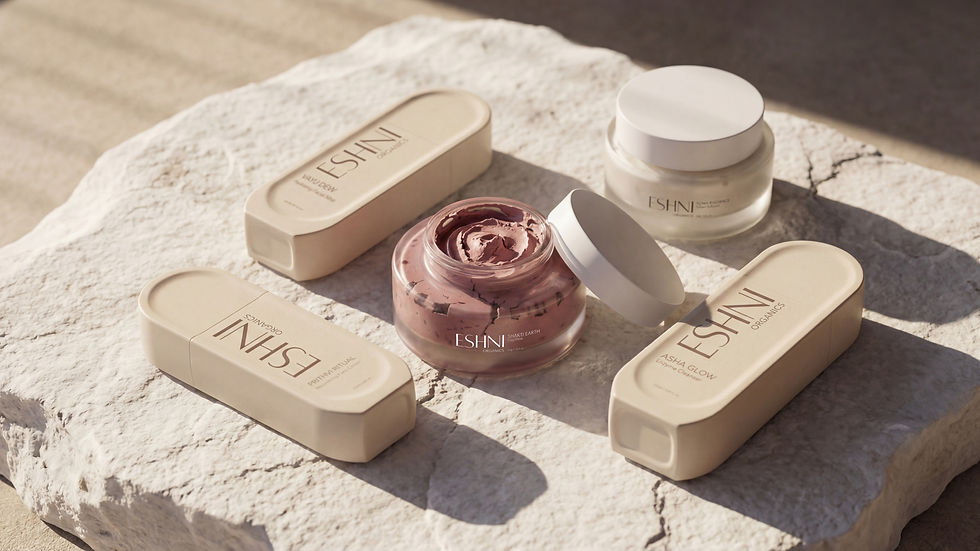
Sensitive skin can make skincare feel like a guessing game.
One product says gentle. Another says dermatologist tested. Another promises to calm, repair, and restore. You try to choose carefully, but somehow your skin still ends up red, tight, stinging, or more reactive than before.
That experience is not a sign that your skin is difficult.
It is often a sign that the formula was never truly designed with sensitive skin in mind.
The best skincare for sensitive skin is rarely the most complicated product on the shelf. More often, it is the one with fewer irritants, fewer unnecessary ingredients, and a clearer reason for everything it contains.
Why Sensitive Skin Reacts to Most Mainstream Products
Sensitive skin isn't a flaw. It's information. When your skin reacts, it's telling you that something in your environment or your routine is disrupting its barrier. Mainstream skincare, for all its promises, is frequently part of the problem.
Most commercial products are formulated to perform in a jar, on a shelf, for eighteen months. That requires preservative systems, stabilisers, emulsifiers, and fillers. Each of those ingredients is an additional variable your skin must tolerate. For skin that is already reactive, more variables means more opportunities for a reaction.
There's also the issue of how products are tested. "Dermatologist tested" does not mean dermatologist approved, and it certainly doesn't mean tested on sensitive skin specifically. It often means a dermatologist observed a small group of participants for 48 hours and reported no acute reactions. That's a low bar.
What Ingredients Trigger Sensitivity Most Often
If you've ever tried to identify what's irritating your skin, you've likely encountered an overwhelming list of potential culprits. But research points consistently to a handful of categories that cause the most widespread reactivity.
Synthetic Fragrance
Fragrance is the single most common cause of contact dermatitis in skincare. A product listed as containing "parfum" or "fragrance" can legally include up to 3,000 individual chemical compounds, none of which are required to be disclosed. For sensitive skin, this is deeply problematic. You cannot avoid what you cannot see. No synthetic fragrance in a formula is a meaningful commitment, not a marketing note.
Sulphates
Sodium lauryl sulphate and its relatives create a satisfying lather, but they do so by stripping the skin's natural lipids. Those lipids are what keeps the barrier intact. Remove them and the skin becomes permeable, reactive, and dry. That tight, stripped feeling after cleansing isn't clean skin. It's compromised skin.
Silicones
Silicones such as dimethicone create an immediate softness that feels like results. They fill in texture and blur imperfections on contact. But they don't treat anything. They sit on the surface, occluding pores and preventing the skin from breathing. For reactive skin, this can trap heat, sebum, and bacteria beneath the surface. The skin looks temporarily better and gradually becomes more dependent on coverage to appear well.
Parabens and Synthetic Preservatives
Parabens are efficient preservatives and they've been used in cosmetics for decades. The concern isn't just potential endocrine disruption, though that research continues. The concern for sensitive skin is direct: parabens are a known contact allergen and appear on most sensitive skin avoidance lists. No parabens, no sulphates, no silicones, no synthetic fragrance isn't a catchy phrase. It's a considered removal of the most common triggers.
Why Fewer Ingredients Mean Fewer Reactions
This is basic logic that the skincare industry has a financial interest in obscuring. Every ingredient in a formula is a potential irritant for someone. Sensitisation, the process by which your immune system learns to recognise and react to a substance, is cumulative. You might tolerate one preservative. You might tolerate one emulsifier. But layer ten of them together, twice a day, for months, and you may develop a reaction you can't trace back to any single cause.
Fewer ingredients mean fewer variables. When a formula contains twenty ingredients instead of forty, the risk of encountering a trigger drops substantially. More importantly, if a reaction does occur, identifying the cause becomes possible. Every ingredient earns its place in a thoughtful formula. Nothing is there to add bulk, extend shelf life without purpose, or create a texture that masks what the formula actually does.
The best skincare for sensitive skin isn't about what's added. It's about what's left out.
How Botanical Actives Calm Without Irritating
Removing harmful ingredients is one half of the equation. The other half is choosing actives that genuinely calm and restore reactive skin without introducing new stress.
This is where Australian native botanicals and Ayurvedic wisdom converge in a way that's worth understanding, not because it sounds poetic, but because the evidence supports it.
Kakadu Plum
Kakadu plum contains the highest recorded natural concentration of vitamin C of any food source on earth, up to 100 times more than an orange gram for gram. Vitamin C supports collagen synthesis and brightens uneven skin tone, but in its natural botanical form it also carries antioxidant compounds that protect the skin barrier rather than challenging it. Synthetic ascorbic acid at high concentrations can cause stinging and irritation. Botanical vitamin C, delivered as part of the whole plant extract, tends to be far better tolerated.
Lemon Myrtle
Lemon myrtle has documented antimicrobial and anti-inflammatory activity. It addresses surface bacteria without the harshness of synthetic antibacterials, which often disrupt the skin's microbiome. For reactive skin prone to breakouts or redness, this distinction matters.
Lilli Pilli
Lilli pilli is rich in ellagic acid and anthocyanins, compounds that support skin elasticity and protect against oxidative stress. It's been used in native Australian plant medicine long before it appeared in any laboratory, and the contemporary research validates what that use suggested.
Ayurvedic Botanical Wisdom
Ayurvedic tradition approaches skin differently to most Western frameworks. It begins with the principle that the skin's condition reflects internal balance, and that external care should support rather than override the skin's own intelligence. Ingredients used in Ayurvedic formulation for thousands of years, such as neem, turmeric, and ashwagandha, have consistent anti-inflammatory and adaptogenic properties documented in peer-reviewed literature. They don't force results. They create the conditions for the skin to restore itself.
Combining this tradition with Australian native botanicals isn't aesthetic branding. It's a considered meeting of two systems that share the same foundational logic: work with the skin, not against it.
What to Look For and What to Avoid on a Sensitive Skin Label
Reading a skincare label takes practice. Here's a practical guide for what to look for and what to move past.
Look for:
Certified organic and naturally derived ingredients, with full disclosure of each one
Short ingredient lists where you can identify the purpose of every item
Australian native botanicals with documented skin benefits
Products that explain what each ingredient does, not just that it's included
Formulas without synthetic fragrance, without parabens, without sulphates, without silicones
Move past:
Any product listing "parfum" or "fragrance" without specifying what that means
Ingredient lists over 30 to 40 items, especially when many are unrecognisable
Claims like "gentle" or "hypoallergenic" without ingredient transparency to back them up
Silicones listed early in the formula (dimethicone, cyclopentasiloxane, phenyl trimethicone)
Multiple preservatives combined, particularly methylisothiazolinone and formaldehyde releasers
Why No Synthetic Fragrance No Parabens No Sulphates No Silicones Matters
These four exclusions aren't marketing checkboxes. Each one represents a specific, documented source of skin reactivity. Together they account for the majority of common skincare complaints: redness, stinging, dryness, barrier damage, and sensitivity that worsens over time.
When a brand commits to excluding all four, it changes the formulation process entirely. You can't use fragrance to make a product smell appealing, so the formula must be elegant enough to stand without it. You can't use silicones to smooth over an underwhelming texture, so the actives must genuinely deliver. You can't rely on aggressive preservatives, so the formula must be stable through cleaner chemistry.
These constraints produce better skincare. Not in spite of what's missing, but because of it.
This is what ingredient transparency actually looks like in practice. You can read about Eshni's approach to what goes into, and what stays out of, each product at eshni.com/about.
How to Begin a Gentle Ritual That Works With Your Skin
The phrase is ritual not routine, and the distinction matters more than it might initially seem.
A routine is something you complete to check a box. A ritual is something you do with attention and intention. For sensitive skin, this shift in approach changes outcomes. When you're paying attention to how your skin feels at each step, you notice earlier when something isn't working. You make adjustments before damage accumulates.
A gentle ritual for sensitive skin doesn't need six cleansers and four serums. It needs fewer products that do more. A cleanser that removes without stripping. A toner or essence that rebalances the skin's pH. A serum that delivers one or two well-evidenced actives. A moisturiser that nourishes without occluding. That's it. Done consistently, this is more effective than a ten-step process built on products that compensate for each other's damage.
How to Transition Without Triggering a Reaction
If you're moving away from conventional skincare toward a minimal botanical ritual, go slowly. Introduce one new product at a time, and give your skin at least two weeks to respond before drawing conclusions. Reactive skin that has been accustomed to silicones may appear to worsen briefly when they're removed, because the coverage is gone. That's not a reaction to the new product. That's the skin becoming visible again.
Patch testing is worth the extra day or two it takes. Apply a small amount of any new product to the inside of your wrist or behind your ear for 24 hours before using it on your face. This is basic and effective practice that most people skip.
If you're ready to begin, the Eshni essential care range is built for exactly this. Six products, each with a clear purpose, certified organic and naturally derived, with every ingredient named and explained. You can explore the full range at eshni.com/category/all-products.
The Feeling on the Other Side
There's a particular kind of relief that comes from simplifying something that has been complicated for too long. You stop scanning ingredient lists with dread. You stop dreading the morning routine. Your skin settles, not overnight, but steadily. The redness calms. The tightness eases. You notice that you're not thinking about your skin constantly, which is its own kind of freedom.
This is what the best skincare for sensitive skin is ultimately trying to deliver. Not perfection. Not a transformation so dramatic it requires a filter to see. Just skin that is calm, balanced, and genuinely cared for. Skin that doesn't demand your attention because it's in crisis.
That's what fewer products that do more actually means in practice. Less noise. More signal. A ritual that works, quietly and consistently, because everything in it earns its place.
Frequently Asked Questions
What is the best skincare for sensitive skin in Australia?
The best skincare for sensitive skin in Australia prioritises short ingredient lists, full transparency, and the exclusion of known irritants including synthetic fragrance, sulphates, parabens, and silicones. Australian native botanicals such as kakadu plum, lemon myrtle, and lilli pilli offer documented anti-inflammatory and antioxidant benefits with good skin tolerance. Brands that explain what every ingredient does, and why it's there, are worth your trust. Those that don't are worth a second look before you commit.
What ingredients should I avoid if I have sensitive skin?
The four most impactful categories to avoid are synthetic fragrance (listed as parfum), sulphates (particularly sodium lauryl sulphate), silicones (dimethicone and related compounds), and parabens. Secondary irritants include methylisothiazolinone, formaldehyde-releasing preservatives, and high concentrations of synthetic vitamin C. Reducing the total number of ingredients in your routine also reduces the cumulative irritation load, regardless of which specific ingredients are present.
How many skincare products does someone with sensitive skin actually need?
For most people with sensitive skin, four to six products is sufficient for a complete daily ritual: a gentle cleanser, a balancing toner or mist, a targeted serum, and a moisturiser suited to your skin type. Additional products such as an eye treatment or a facial oil can be added if there's a specific concern to address. Using fewer products that do more means each one is chosen with clear purpose, reducing the risk of interaction or overload.
Is natural skincare always better for sensitive skin?
Natural doesn't automatically mean safe, and synthetic doesn't automatically mean harmful. Poison ivy is natural. The distinction that matters for sensitive skin is whether the formula has removed known triggers, whether the actives are evidence-backed, and whether the brand discloses every ingredient with honesty. Certified organic and naturally derived formulas that also exclude synthetic fragrance, sulphates, parabens, and silicones tend to perform better for reactive skin, but it's the transparency and the specific ingredient choices that matter most.
Can Ayurvedic skincare help with sensitive or reactive skin?
Ayurvedic botanical wisdom has a long tradition of working with skin sensitivity through adaptogenic and anti-inflammatory plant actives. Ingredients like neem, turmeric, and ashwagandha have consistent peer-reviewed evidence supporting their skin-calming properties. Ayurvedic formulation philosophy also aligns well with minimal skincare principles: use what is necessary, nothing more, and support the skin's own capacity to restore balance. For reactive skin, this philosophy tends to produce gentler outcomes than high-intervention approaches.